
A visceral ‘Odyssey’
So much has already been written about Christopher Nolan’s movie “The Odyssey” that I hesitate to add to the conversation. Nevertheless…
I found it to be a very visceral experience. That’s partly because I saw it in IMAX, which tends to be overwhelming visually, and partly because of its powerful – and often quite disturbing – visuals. I haven’t slept well since seeing it, and when I’m lying awake wondering why I’m awake, I keep seeing certain images again and again.
Before I continue, let me repeat the gist of a recent Facebook post.
It is sadly amusing to read so many reviews of the movie that criticize Nolan for presenting Homer's epic in terms of 2026 sensibilities.
What do these self-appointed cultural “purists” expect -- that he would try to interpret Homer in terms an Elizabethan might appreciate, or perhaps try the phony Mel Gibson ploy of presenting it in ersatz ancient languages (a la “The Passion of the Christ”)?
As to the racists who complain about the casting of non-white actresses as Helen of Troy and the goddess Athena: Racists will be racists. Who do you expect them to be?
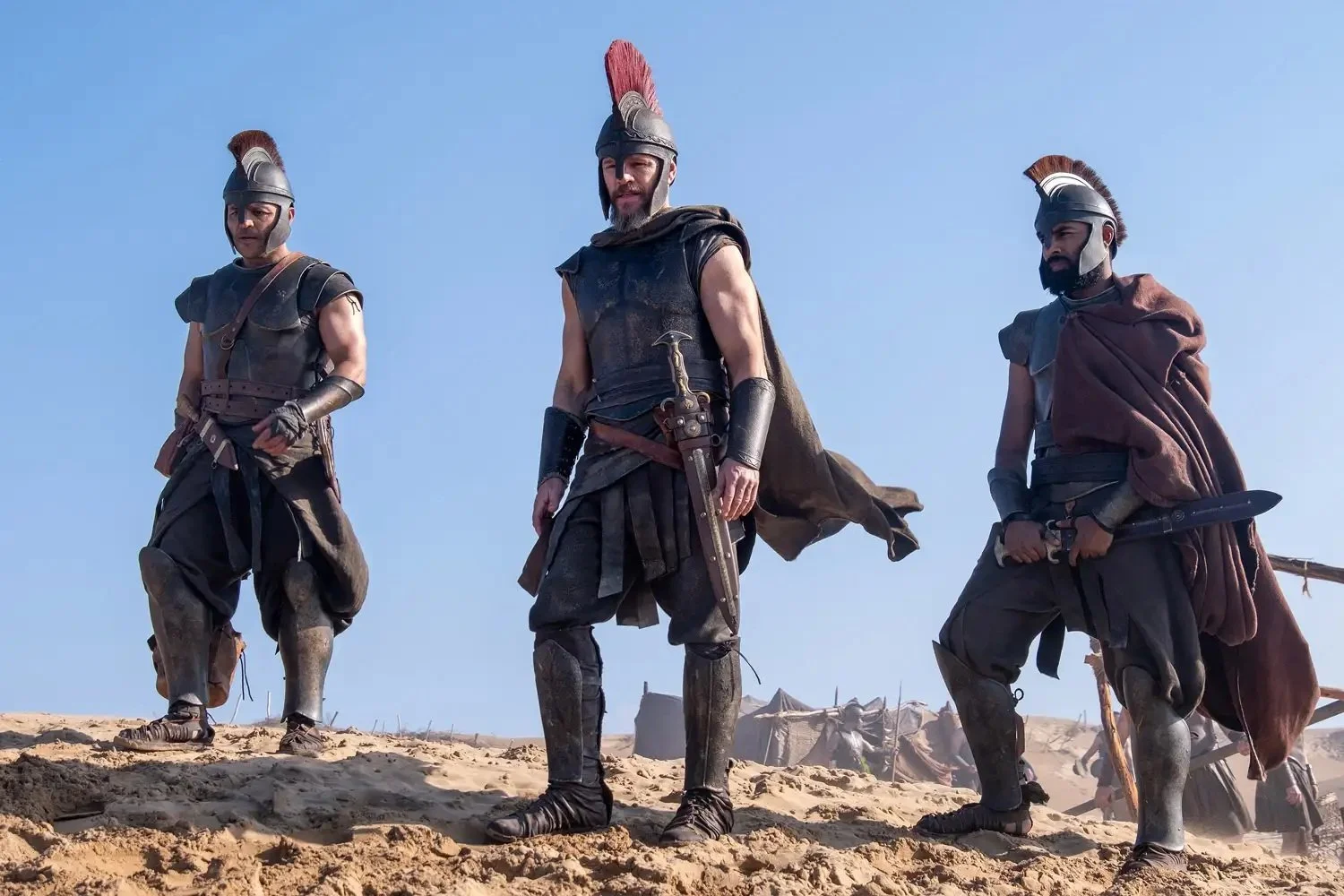
Two of the upsetting scenes involve the giant cyclops trapping Odysseus and his men in a cave, and the sorceress Circe turning hungry sailors into pigs. The first is terrifying, the second almost sickening. Also memorable is the scene where Odysseus watches helplessly while giant armored warriors overturn one of his ships and massacre its crew.
Though his reunion with wife Penelope is rewarding, far more moving for me is the brief sequence where he touches his old dog, Argos, who has been waiting faithfully 20 years for his master to return, and we see a tail briefly wagging before the dog dies.
Why does Odysseus encounter such frightening obstacles to his return? It is explained that he violated xenia, the ancient law of hospitality, which is once or twice confusingly (and I think erroneously) called “Zeus’s law.”
This law is that you should always offer hospitality to anyone who shows up at your door because he might be one of the gods in disguise. This principle was widely known in the ancient world and was given exalted status in early Christianity. (Note Hebrews 13:2 and Acts 14:11-12.) But it’s a slippery concept.
The abduction of Helen was a violation of xenia. So was the deception of the Trojan Horse, an idea of Odysseus’ that led to the defeat and sacking of Troy. But the mayhem of Troy’s sacking was simply how ancient wars were fought and was not, apparently, a violation of xenia. The violation was in the deception that led to the sacking. Or so I understand.
Odysseus is haunted throughout the movie by thoughts that he violated xenia. So at the end, through reunited with Penelope, he goes into voluntary exile, leaving his son Telemachus to rule Ithaca.
A couple more quick thoughts:
· The movie probably will win an Oscar for its editing (especially brilliantly shown in the Circe sequence.)
· I thought the Hades sequence was muddled, at best.
· Yes, Nolan likes his movies loud, but AMC theaters are always too loud, if you ask me. I guess the volume is for the benefit of those who like to sit in the back row, while I prefer sitting much closer to the screen – even a giant IMAX screen.
Now I’ve got to make Linda suffer through (or hide to avoid) two previous screen versions of the tale: “Ulysses,” starring Kirk Douglas (1954); and “The Odyssey,” starring Armand Asante (1997) – but wait, featuring Vanessa Williams as the nymph Calypso. What must our noisy racists make of that!